Selecting the right utility trailer can make day-to-day landscaping operations more efficient, organized, and profitable. Because your trailer carries everything from mowers to mulch, choosing a model built for durability and versatility is essential.
Join our experts in utility trailers from Appalachian Trailers as we explain what landscaping companies should look for when deciding which type of utility trailer best fits their workflow.
Determining Your Landscape Company’s Trailer Needs
Before choosing a trailer, it’s important to assess how your crew works, what equipment you haul, and how often your team is on the road. Taking time to evaluate these basics will give you clarity on size, features, and towing requirements that benefit your landscaping company.
Evaluate Your Equipment Load
Every landscaping operation is unique, and your utility trailer should reliably accommodate the tools you use most. Consider the weight of zero-turn mowers, walk-behind mowers, aerators, and handheld tools when selecting capacity. Ensuring your trailer has enough payload prevents strain on the frame and extends the life of both your equipment and tow vehicle.
Consider Daily Workflow Efficiency
A utility trailer for full-service landscaping needs to support quick loading and unloading throughout the workday. Think about how many stops your crew makes, whether they frequently transport material like soil or mulch, and if their typical route includes tight residential spaces.
The right configuration can create smoother transitions between jobs and reduce time spent reorganizing equipment.
Account for Tow Vehicle Capabilities
Not every landscaping truck can tow every trailer. Check your vehicle’s towing capacity and what hitch type it supports before narrowing down trailer models. Matching your trailer to your truck ensures safe operation, predictable handling, and less wear on your brakes and transmission.
Open Utility Trailers
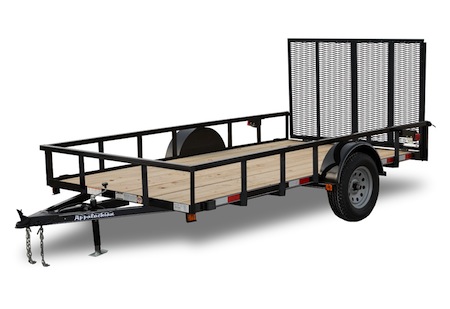
Open utility trailers are one of the most common choices for landscaping companies because they offer flexibility, easy access, and straightforward loading for everyday equipment. The open design of contractor grade utility trailers allows crews to quickly grab tools, move mowers on and off the deck, and work efficiently across multiple job sites.
Easy Access for Frequent Loading
Because the trailer is open on all sides, loading and unloading equipment takes far less time. Crews handling multiple stops per day benefit from being able to quickly access mowers, trimmers, blowers, and hand tools without navigating doors or enclosed spaces. This ease of access helps shorten turnaround times between jobs.
Lightweight and Simple to Tow
Open trailers tend to weigh less than enclosed models, making them easier to tow with a range of trucks and service vehicles. A lighter trailer often improves fuel efficiency and reduces strain on brakes and transmissions. This is especially beneficial for small or expanding landscaping businesses upgrading their fleet.
Versatile Enough for Different Job Types
An open deck is ideal for hauling both equipment and materials like mulch, sod, or debris. Landscapers who switch tasks throughout the day—mowing, leaf removal, hardscaping support—will appreciate the versatility. The open layout allows for custom tie-down setups to secure different equipment types safely.
Landscape Trailers with Expanded Features
Landscape trailers are specifically designed with the needs of lawn care crews in mind. These trailers combine utility features with added organization options, making them ideal for businesses that demand efficiency and equipment protection.
Built-In Racks and Storage Options
Tool racks, trimmer brackets, blower shelves, and lockable storage help keep equipment organized and off the trailer floor. This reduces clutter, minimizes damage to tools, and speeds up work at each job site. The organized layout also makes inventory checks and end-of-day cleanups faster.
Reinforced Gates and Loading Stability
Landscape trailers often feature mesh gates or reinforced ramps built to handle heavy, repeated loading of zero-turn and walk-behind mowers. Many models use spring-assisted gates to reduce strain on the crew when lifting and lowering. These upgrades extend the lifespan of the ramp and improve day-to-day usability.
Side Rails and Expanded Tie-Down Points
High mesh sides or steel rails help contain loose materials like brush or mulch and provide extra stability for tall equipment. Additional tie-down points allow crews to secure each mower or tool in a dedicated spot. This level of organization helps reduce movement during transport, protecting both equipment and the trailer.
Equipment Haulers
Equipment trailers are designed for heavier loads and rugged use, making them ideal for landscaping companies that rely on commercial-grade machinery or support hardscaping projects. Their construction focuses on durability, stability, and the ability to handle high-capacity hauling.
Heavy-Duty Decks and Frames
Equipment haulers use reinforced steel frames and thick decking capable of supporting skid steers, loaders, commercial mowers, and other heavy machinery. Landscapers who frequently transport large equipment benefit from the added durability and long-term reliability these haulers provide.
High-Capacity Axles and Braking Systems
Equipment haulers typically offer tandem axles, electric brakes, and suspension systems designed to move substantial weight safely. For companies transporting machinery over longer distances, this added stability improves handling and reduces wear on tow vehicles.
Wider Decks and Easy Loading Options
Many equipment trailers feature wider platforms and full-width ramps that make loading large machines safer and more predictable. These trailers are especially useful for teams who support both landscaping and hardscaping services.
Other Trailer Types Useful for Landscaping Companies
Some landscaping businesses benefit from niche trailer models that support specific tasks or environments. These additional options can provide convenience, protection, and specialized hauling solutions.
Enclosed Trailers
Enclosed trailers offer full protection from weather, theft, and road debris, making them ideal for businesses that carry valuable tools or operate year-round. Landscapers who store equipment inside their trailer between jobs also appreciate the added security.
Dump Trailers
Dump trailers are valuable for companies that handle mulch, gravel, soil, and debris removal. Their hydraulic dump beds allow crews to unload material quickly, reducing manual labor and improving turnaround times on landscape installation or cleanup projects.
Tilt Trailers
Contractor grade tilt trailers use a pivoting deck that allows heavy equipment to be loaded without ramps. Landscapers who frequently haul compact machinery may prefer this option for its simplicity and reduced need for removable ramp components.
Gooseneck Trailers
Gooseneck trailers are a strong option for landscaping businesses that need maximum stability and higher hauling capacity for heavy equipment. Their over-the-axle hitch design improves weight distribution, reducing sway when transporting large mowers, skid steers, or material loads. They offer the durability and control needed for long-distance hauling and demanding day-to-day operations.
Key Features to Look for in a Landscaping Utility Trailer
Once you’ve narrowed the trailer type, focus on features that improve reliability, safety, and job-site efficiency. The following elements matter most to landscaping professionals.
Trailer Size and Deck Dimensions
Choosing the right deck size ensures smooth loading and prevents equipment from being cramped or hard to access. Many landscapers prefer 6×12, 6×14, or 7×16 trailers depending on their mower fleet and material needs. Always consider growth—your trailer should support future equipment upgrades, not just your current setup.
Ramp and Gate Design
A strong, user-friendly ramp gate makes a significant difference when loading heavy equipment multiple times a day. Look for reinforced mesh ramps or split-gate designs that are easier to lift and reduce wind resistance when traveling. Quality hinges and spring-assist mechanisms help prevent fatigue and extend the lifespan of the gate.
Axles and Payload Capacity
A trailer must handle consistent daily weight without strain. Tandem-axle trailers often provide smoother hauling, higher capacity, and better stability for landscaping crews with larger machines. Single-axle trailers work well for lighter operations but should still offer adequate payload for your equipment and materials.
Tie-Downs and Storage Options
Optional storage features improve organization and reduce downtime between tasks:
- Tool Racks: These create designated storage for rakes, shovels, and trimmers, keeping the deck clutter-free.
- On-Board Storage Boxes: Toolboxes secure handheld tools, safety gear, and spare parts in one location.
- Multiple Tie-Down Points: Extra tie-downs help secure mowers, blowers, and bagged material safely during transport.
Material and Construction Quality
A landscaping trailer takes daily wear, so construction quality is essential. Look for sturdy steel frames, pressure-treated floors, and high-quality welds. Durable coatings or paint minimize rust and extend the working life of your trailer, especially in humid regions or locations with frequent rainfall.
Landscaping Utility Trailer FAQs
What size utility trailer is best for my landscaping company?
Most landscaping companies prefer 6×12 or larger, depending on mower size and how much additional equipment they haul daily. Finding good contractor grade utility trailers—built for heavy duty towing is essential—while finding the best size will depend on the amount of equipment your team hauls daily.
Should I choose a single-axle or tandem-axle Trailer?
Tandem-axle trailers handle heavier loads and offer more stability, making them ideal for commercial landscaping crews. Single-axle models work well for smaller operations with lighter equipment.
Is it worth spending extra money to customize my landscaping company’s trailer with extra features?
Yes—investing in custom features like tool racks, reinforced ramps, and added tie-down points can significantly improve efficiency, reduce equipment damage, and save labor time during busy seasons.
How important is payload capacity when hauling equipment?
Payload capacity is critical because landscaping equipment is heavy and used daily. Choosing the right capacity protects your truck, trailer, and equipment from unnecessary wear.
Contact Appalachian Trailers Today for Top-Quality Utility Trailers
Choosing the right trailer can make a meaningful difference in the efficiency and growth of your landscaping business.
Appalachian Trailers offers dependable options built for daily commercial use. Explore our full lineup of trailers for sale that—or contact our team today to get guidance on finding the best trailer to fit your workload and keep your crew moving smoothly from one job to the next.
Call us today at [phone] or fill out our convenient contact form to get started.